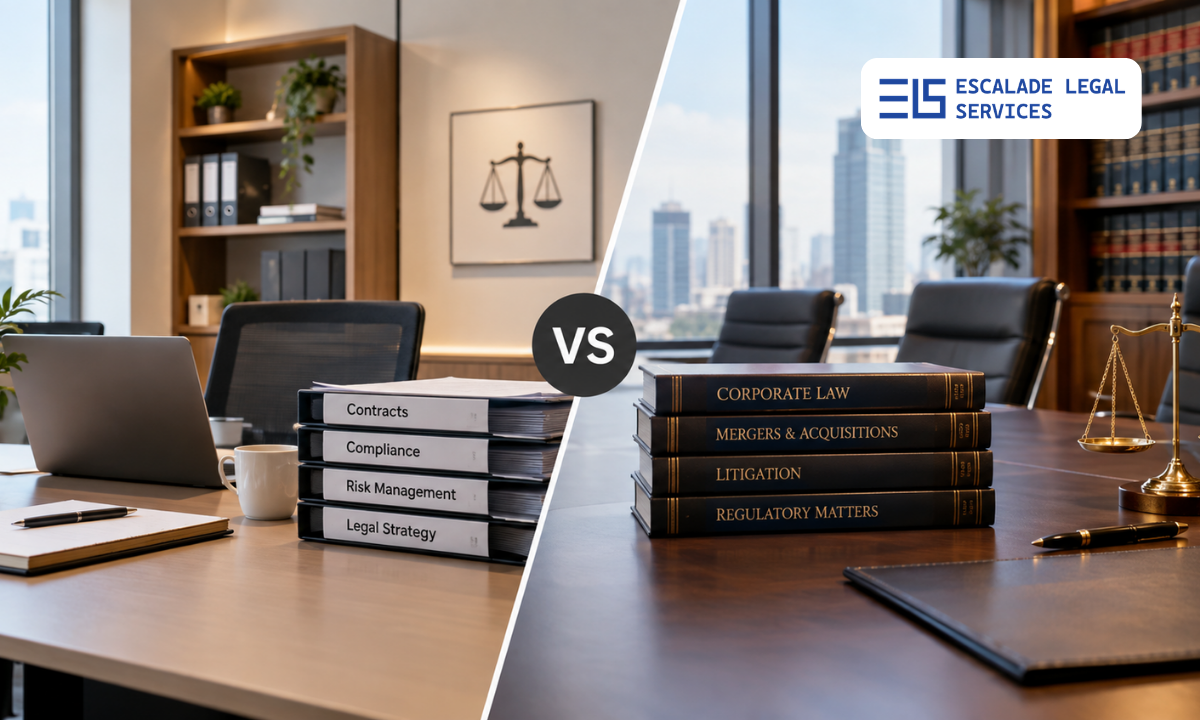
Every growing company eventually outgrows informal legal handling. Founders then face a practical question: should we build an in-house legal team, or work with an external partner such as an ip law firm in Bangalore or a corporate law firm in Bangalore? The answer affects your budget, your risk exposure and how quickly you can close deals, file trademarks or respond to disputes. This guide compares both models in detail and helps you choose the structure that fits your business stage.
What Is an In-House Legal Team?
An in-house legal team is made up of lawyers or legal officers employed directly by your company. They work inside the business, attend internal meetings and handle day-to-day legal matters as part of the management structure.
Typical responsibilities include:
- Reviewing and drafting routine contracts such as vendor agreements and NDAs
- Managing statutory and regulatory compliance
- Advising HR on employment labour law questions such as contracts, policies and terminations
- Maintaining internal policies and data protection practices
- Coordinating with external counsel on specialised or contentious matters
The biggest strength of an in-house team is proximity. They understand your products, your people and your internal politics, so advice is fast and contextual.
What Is a Corporate Law Firm?
A corporate law firm is an independent practice that serves multiple clients and brings a broad range of legal skills under one roof. Instead of hiring a single employee, you engage a team with experience across company formation, commercial agreements, compliance, mergers, funding rounds, disputes and intellectual property.
A good firm acts as an extension of your business. You can use it for one-off projects, for a monthly retainer, or for full outsourced legal support.
In-House Legal Team vs Corporate Law Firm: Key Differences
| Factor | In-House Legal Team | Corporate Law Firm |
| Cost structure | Fixed salaries, benefits, tools and training | Project fees, hourly rates or retainers |
| Breadth of expertise | Limited to the hires you make | Multi-practice expertise on demand |
| Availability | Dedicated to your business | Shared across clients, though retainers secure priority |
| Business context | Very deep | Builds over time through repeat work |
| Scalability | Slow, needs hiring and onboarding | Fast, scales up or down with demand |
| Specialist work | Usually outsourced anyway | Handled directly |
| Independence | Reports to management | Can give objective, external opinions |
Neither model is automatically better. The right choice depends on your legal volume, the complexity of your work and your growth plans.
Cost Comparison: Which Is More Economical?
Cost is usually the first thing business owners examine, and it is often misjudged.
The true cost of an in-house team
A salary is only part of the expense. Hiring a qualified corporate counsel also means paying for:
- Employee benefits, bonuses and statutory contributions
- Legal research databases and compliance software
- Continuing education and bar association memberships
- Recruitment costs and onboarding time
- Replacement costs if the lawyer leaves
For a small or mid-sized company, one in-house lawyer cannot be an expert in contracts, trademarks, patents, employment, tax and litigation at once. You will still pay outside counsel for the gaps.
The cost of working with a law firm
A corporate law firm charges only for the work you actually need. Many firms offer fixed-fee packages for common tasks such as incorporation, trademark filing or agreement drafting, which makes budgeting predictable. A monthly retainer can give you regular access to advice without a full-time salary.
The trade-off is that heavy, continuous legal demand can become expensive at hourly rates. If your company generates a constant stream of contracts, disputes and compliance work, a salaried team may eventually be cheaper per task.
Rule of thumb: if your legal needs are occasional or varied, outsourcing is usually more economical. If they are constant and repetitive, in-house becomes more cost-effective.
When an In-House Legal Team Makes Sense

Building an internal team is a smart move when:
- Legal volume is high and steady. You sign dozens of contracts every month and need same-day turnaround.
- You operate in a heavily regulated sector. Banking, healthcare, insurance and fintech often need constant compliance oversight.
- Confidentiality is critical. Sensitive strategy discussions are easier with someone embedded in the business.
- You are a large or listed company. Boards and regulators expect strong corporate governance compliance, including board processes, filings and statutory records, handled by an internal function.
- You have the budget to build a team. A single lawyer is rarely enough, so you should plan for a small department with different skills.
When a Corporate Law Firm Makes Sense
Engaging an external firm is the better path when:
- You are a startup or early-stage company. You need company formation compliance services, founder agreements, shareholder terms and funding documents without hiring full-time staff.
- Your needs are project based. Examples include a fundraising round, a merger, a joint venture or a licensing deal.
- You need multi-disciplinary advice. A firm can cover corporate, commercial, employment, intellectual property and dispute resolution matters together.
- You want an independent opinion. Outside counsel can review a risky deal without internal bias.
- You want predictable costs. Fixed-fee engagements protect you from salary commitments during slow periods.
Founders of young companies will find the guidance on startup lawyers in Bangalore useful when deciding how much legal support they need at the formation stage.
The IP Factor: Why Specialist Counsel Matters

One area where even large in-house teams usually rely on outside experts is intellectual property. Trademarks, patents, copyrights and designs involve technical procedures, strict timelines and specialised enforcement strategies.
An in-house generalist may not be able to handle:
- Trademark searches, filing and examination replies
- Opposition and cancellation proceedings
- Patent drafting, prosecution and prior art analysis
- Copyright registration and licensing structures
- Anti-counterfeiting and infringement actions
- International filings through systems administered by WIPO
This is where an ip law firm in Bangalore adds clear value. Experienced ip lawyers in Bangalore deal with the Trademark Registry, the Patent Office and the courts every day, so they know how examiners think, how oppositions are argued and how to protect a brand without wasting time or money.
Bangalore also has one of the densest concentrations of technology startups, SaaS companies, biotech ventures and e-commerce brands in India. These businesses often hold most of their value in intangible assets such as software code, brand names and proprietary processes. Leaving those assets unprotected is one of the most expensive mistakes a founder can make. Once they are protected, intellectual property licensing lets you earn from them through franchise, technology and brand deals without losing ownership.
Trademark registration in India typically takes 18 to 24 months from filing to registration, so early filing matters. Businesses that wait until a competitor copies their brand often face costly disputes. You can read more about the process on the trademark registration in Bangalore page, and about invention protection in the guide to patent registration in Bangalore.
The Hybrid Model: The Best of Both Worlds
Many successful companies do not choose between the two options. They combine them.
In a hybrid model:
- A small in-house team, or even a single legal manager, handles daily contracts, internal policies and coordination.
- An external corporate law firm handles incorporation, funding, complex negotiations, litigation and compliance projects.
- A specialist IP firm manages the trademark, patent and copyright portfolio.
This structure keeps fixed costs low while giving you access to deep expertise whenever you need it. It also helps your internal team focus on strategic work instead of researching unfamiliar areas of law.
If you are scaling quickly, the hybrid approach is often the most practical. A trusted corporate law firm in Bangalore can serve as your outsourced legal department in the early years and then work alongside your internal team as it grows. When a funding round, merger or acquisition arrives, experienced mergers acquisitions lawyers can handle due diligence and deal documents while your internal team keeps the business running.
Risk and Compliance: A Closer Look
Legal risk grows with every contract signed, employee hired and product launched. Consider how each model handles common risk areas.
Contracts. An in-house lawyer can review agreements quickly, but a law firm often brings broader market knowledge of what terms are standard and what should be negotiated. Poorly drafted agreements are a leading cause of commercial disputes. Professional contract drafting review services catch risky clauses before signature, and businesses that want tailored documents can explore general commercial agreements support.
Regulatory compliance. India’s compliance landscape continues to evolve, including data protection requirements under the Digital Personal Data Protection Act. Outside specialists keep up with regulatory changes across many clients and can alert you early.
Disputes. In-house lawyers can manage early-stage disputes, but litigation before courts and tribunals usually needs external counsel with courtroom experience. Early advice on corporate dispute resolution often saves months of cost and delay.
Equity and governance. Founder disputes, shareholder issues and board-level decisions benefit from an independent legal voice.
How to Decide: A Practical Checklist
Answer these questions honestly before choosing a model:
- How many legal tasks does the business handle each month?
- Are those tasks repetitive, or do they involve many different practice areas?
- Does the business own valuable IP that needs active protection?
- What is the annual budget for legal spend, including hidden costs?
- How fast do we need legal turnaround?
- Are we planning funding, expansion or an acquisition in the next 12 to 24 months?
- Do we need independent advice for high-stakes decisions?
If most answers point to variable, specialised or project-based needs, a law firm is likely the right starting point. If they point to constant, predictable, high-volume work, begin building internal capacity and keep a firm on call for specialist matters.
Tips for Choosing the Right Law Firm
Whether you are hiring a corporate firm or an IP specialist, look for these qualities:
- Relevant experience. Ask about work with businesses of your size and industry.
- Verified credentials. Check bar enrolment, professional memberships and any international registrations.
- Transparent pricing. Insist on clear fee structures and written scopes of work.
- Responsiveness. Legal advice is only useful when it arrives on time.
- Strategic thinking. The best advisors explain risks and options, not just legal theory.
- Track record. Look at client feedback, case outcomes and the number of matters handled.
Why Businesses Choose Escalade Legal Services
Escalade Legal Services takes a multidisciplinary approach to real-time legal assistance and acts as a one-stop shop for company legal needs. The firm is led by Venkata Raghavan, an IP lawyer with more than 18 years of experience and an LLM from the University of California. He is enrolled with the Karnataka State Bar Council, holds memberships with the International Trademark Association and the Asian Patent Attorneys Association, and is registered as a foreign lawyer before the Singapore International Commercial Court.
What clients can expect:
- End-to-end IP solutions covering trademarks, patents, copyrights and designs
- General corporate advisory, from company inception and structuring to contracts, compliance and licensing
- Commercial litigation and dispute support backed by hands-on courtroom experience
- Startup-friendly support as a registered start-up facilitator under the Digital India Programme
- A strong track record, including 1000+ registered trademarks and 500+ trademark opposition hearings handled
- Cost-effective solutions for national and international clients
For businesses that need both IP protection and a dependable corporate law firm in Bangalore, working with one firm avoids the gaps and duplication that come from juggling several advisors.
Frequently Asked Questions
Is an in-house legal team cheaper than a corporate law firm?
Not always. A full-time lawyer brings salary, benefits and tool costs regardless of workload. For businesses with occasional or varied legal needs, a law firm is usually more economical.
Can a startup manage without an in-house lawyer?
Yes. Most startups rely on external counsel for incorporation, founder agreements, contracts, trademarks and funding documents until legal volume justifies a hire.
Do in-house lawyers handle trademark and patent filings?
Some do, but most companies rely on specialist ip lawyers in Bangalore because IP prosecution and enforcement require focused procedural knowledge and regular interaction with the registries.
What is a hybrid legal model?
It combines a small internal legal function with external firms for specialised or high-stakes work. It balances cost control with expert access.
When should a growing company hire its first in-house counsel?
Typically when legal tasks become continuous, contract volume rises sharply, or regulatory exposure increases. Until then, a retainer with a trusted firm is often more efficient.
How do I know if I need an IP specialist?
If your brand name, logo, software, invention or creative content generates revenue or competitive advantage, you need someone who can register and defend it. An experienced ip law firm in Bangalore can audit your assets and recommend a protection plan.
Final Thoughts
There is no single correct answer to the in-house versus law firm question. In-house teams offer speed and deep business knowledge. Corporate law firms offer breadth, independence and flexible costs. For most growing businesses in Bangalore, a mix of both, supported by specialist IP counsel, delivers the strongest protection at a sensible price.
If you are unsure which structure suits your stage of growth, our corporate and IP lawyers can review your legal workload and recommend the right approach.
Ready to take the next step?
Escalade Legal Services takes a multidisciplinary approach towards real-time legal assistance and acts as a one-stop shop for all your legal needs. We specialize in providing IP and Technology support for your Company.
Schedule a Strategic Legal Consultation
To audit your corporate compliance, safeguard your proprietary intellectual property, or structure investor-ready commercial agreements, connect with the corporate and IP attorneys at Escalade Legal Services:
- Headquarters: Escalade Legal Services, Chambers 401, DBS House Business Centre, No. 26, Cunningham Road, Bengaluru, Karnataka 560052
- New Delhi Office: World Trade Towers, Barakhamba Lane, Connaught Place, New Delhi 110001
- Official Website: escaladelegal.com
- Direct Contact: +91 96110 57021 / escalade@escaladelegal.com
Taking the right legal steps today ensures your business is built to scale smoothly, securely, and with total regulatory clarity.