Valuation heavily depends on exclusive rights. When executing massive corporate buyouts, Mergers & Acquisitions Legal Services meticulously calculates the exact lifespan of a target company’s registered assets.
The ability to legally block competitors from cloning a physical product directly dictates its ultimate market worth. As a specialized Design Intellectual Property Law Firm in India, we constantly advise corporate boards to aggressively monitor their statutory timelines.
Engaging a Top IP Law Firm in Bangalore guarantees that executive teams never accidentally forfeit their highly lucrative visual monopolies due to missed administrative deadlines. Unlike a registered brand name, which can theoretically last forever, aesthetic rights operate on a strict, depreciating clock.
Corporate directors must strategically align their manufacturing cycles with these exact expiration dates to maximize financial returns before market exclusivity vanishes. To facilitate highly accurate revenue forecasting, this legal briefing will map out the complete lifecycle of a registered physical asset.
- We will define the core principles of aesthetic exclusivity and examine why statutory law specifically limits the commercial lifespan of physical corporate shapes.
- We will outline the exact calendar duration of the initial monopoly and detail the precise administrative filings required to unlock the final extension phase.
- We will address the financial reality of the public domain, detailing how companies must execute continuous product innovation before their current legal protections permanently expire.
Properly managing this strict legal calendar transforms a temporary visual advantage into long-term corporate dominance. Accurately tracking these exact expiration dates ensures your enterprise fully exploits its manufacturing investments without unexpectedly surrendering its market share to opportunistic rivals.
Legal Disclaimer
The statutory timelines and administrative information detailed in this article are strictly for general educational purposes and do not constitute formal legal counsel. Managing intellectual property is highly complex and heavily dependent on specific government deadlines. Reviewing this material does not establish an official attorney-client relationship with Escalade Legal Services. We strongly advise all corporate boards to seek personalized, dedicated legal representation by scheduling a formal portfolio audit at our Cunningham Road office before making any critical manufacturing or financial decisions.
Key Points at a Glance
- A registered industrial design exclusively protects the unique visual aesthetic, surface pattern, and external geometry of a physical product, completely excluding any mechanical or functional features.
- The initial statutory duration of design protection in India is strictly capped at ten years, beginning immediately from the formal date of registration.
- Management teams can legally extend this aesthetic monopoly for one final five-year period, setting the absolute maximum protection limit at exactly fifteen years.
- Mandatory renewal applications must be meticulously filed with the Controller General of Patents, Designs and Trade Marks before the original ten-year term expires to secure the final extension.
- Once the strict fifteen-year statutory limit is reached, the visual design permanently enters the public domain, legally authorizing aggressive competitors to mass-produce the same aesthetic.
The Foundation of Defining Aesthetic Security
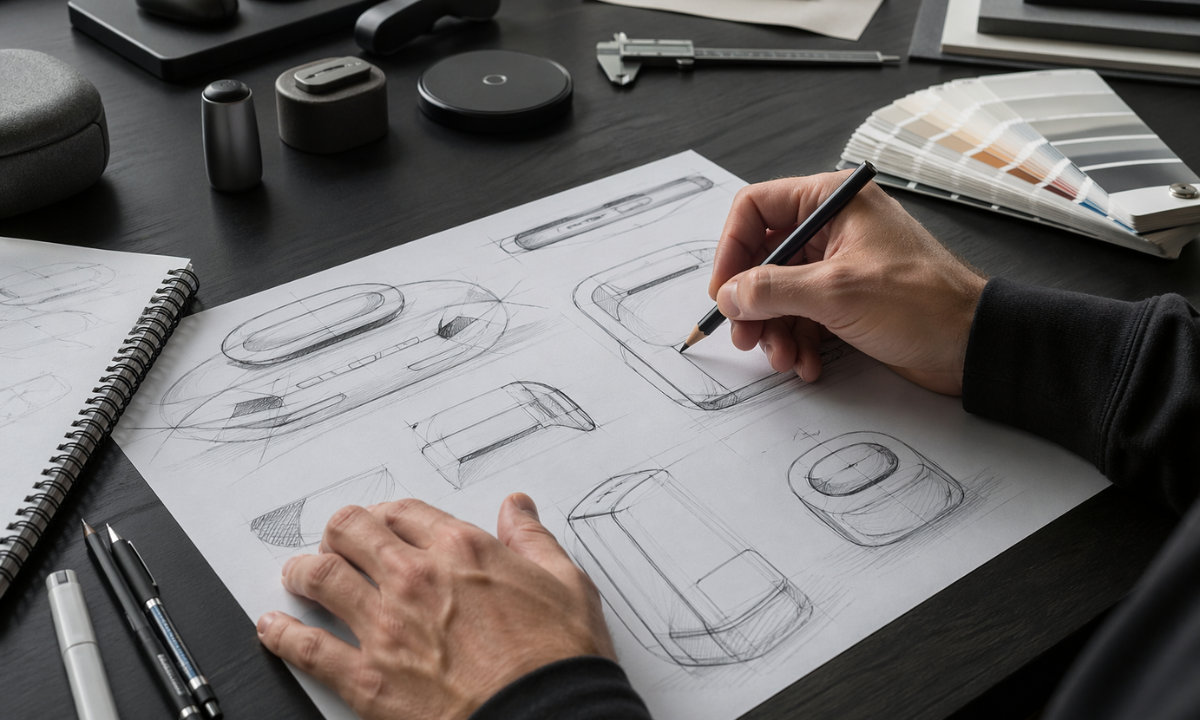
Before mapping out the strict statutory expiration dates, executive boards must establish a firm baseline of exactly which physical assets they are securing.
When corporate directors ask what design protection is, they are inquiring about the specific legal mechanism that grants a temporary statutory monopoly over the pure visual appearance of a commercial product.
In the highly regulated realm of physical manufacturing, intellectual property is strictly divided into functional utility and aesthetic appeal. To execute a flawless product launch strategy, management teams must clearly distinguish between these two distinct legal jurisdictions.
- Functional Security (Utility Patents): Secures the internal engineering, mechanical operation, and technical functionality of a newly invented mechanism or software architecture.
- Aesthetic Security (Design Registration): Secures the exclusive commercial rights to the external shape, structural configuration, unique surface pattern, or distinct color composition applied to a physical article.
A registered design exclusively protects the exterior ornamentation that makes a product visually appealing to the end consumer. If a particular physical feature is dictated entirely by how the machine operates, it falls completely outside the jurisdiction of the Designs Act and is entirely ineligible for this specific protection.
This legal boundary is absolutely critical for industries like consumer electronics, luxury furniture, and bespoke apparel, where the unique visual silhouette of the product is often the primary driver of retail revenue.
Securing this aesthetic perimeter permanently prevents opportunistic competitors from manufacturing identical-looking copycats, thereby preserving the premium pricing strategy and protecting the overall market share of the innovating corporation.
The Statutory Timeline of Ten Years Plus Five

When a corporate board successfully secures a formal visual monopoly, they are granted a highly specific window to maximize their commercial returns.
Under the strict provisions of the Indian Designs Act, the initial duration of design protection in India after its registration is exactly ten years. This precise statutory clock begins ticking immediately from the official date of registration, which legally corresponds to the exact date the formal application was originally filed with the government registry.
During this initial decade, the registered enterprise holds an absolute, legally enforceable monopoly over the specific product aesthetic.
This ten-year period represents the most critical phase of the entire commercial product lifecycle. It provides the innovating corporation with the exclusive statutory right to manufacture, import, license, and sell physical articles bearing the protected visual design, completely free from legal market replication.
Executive management teams must strictly utilize this primary window to aggressively saturate their target market, build deep consumer brand loyalty, and rapidly recoup their initial research and manufacturing investments.
Understanding this exact ten-year boundary is absolutely vital for corporate financial officers. It allows them to accurately project long-term revenue streams, securely amortise the heavy capital costs associated with launching a new physical product line, and dictate the exact pricing strategy required to maximize profits before the initial exclusivity period concludes.
Securing the Extension

The initial ten-year term is not the absolute end of your statutory monopoly. To successfully extend the validity of design registration in India to its maximum legal limit, corporate boards must execute a precise administrative renewal process.
The Indian Designs Act permits a single, final extension of exactly five additional years, capping the total possible protection period at a strict fifteen years. However, management teams must understand that this extension is absolutely not automatic.
To unlock this final phase of market exclusivity, your appointed legal counsel must navigate a rigid government protocol long before the original deadline arrives.
The following timeline outlines the mandatory administrative steps required to secure this critical extension.
- Statutory Filing Formulation: Accurately preparing and submitting the official Form 3 application to the Controller General of Patents, Designs and Trade Marks.
- Pre-Expiration Execution: Filing the renewal documents and paying the required government fees strictly before the expiration of the original ten-year term.
- Lapsed Registration Restoration: If a board accidentally misses the primary deadline, it must file a highly complex restoration application within one year of the lapse, accompanied by significant penalty fees and legal justifications.
Failing to properly manage this specific renewal calendar exposes a corporation to catastrophic financial risk. To clearly illustrate the stakes involved, executive directors must review how the government treats timely renewals versus administrative failures.
| Administrative Action | Statutory Result | Direct Commercial Consequence |
|---|---|---|
| Timely Extension Filing | Grants an uninterrupted five additional years of aesthetic exclusivity. | Competitors remain legally blocked, fully preserving your premium market pricing and revenue streams. |
| Missed Statutory Deadline | Immediate and complete lapse of your registered intellectual property rights. | The physical aesthetic enters the public domain instantly, authorizing legal market cloning by aggressive rivals. |
Missing this critical government deadline permanently destroys a highly valuable corporate asset. Elite corporate governance requires implementing rigid internal docketing systems to track these exact expiration dates years in advance.
Executing this final extension flawlessly is an absolute commercial necessity, ensuring your enterprise extracts the absolute maximum financial return from its original manufacturing and design investments.
The Public Domain of When Protection Expires
Corporate boards must eventually face the reality of the absolute statutory limit. Even with a perfectly executed renewal strategy, the active protection of industrial design in India permanently ceases exactly fifteen years from the initial date of registration.
At this precise moment, the physical product aesthetic crosses a strict legal threshold and officially enters the public domain. The legislative intent behind this rigid expiration date is to balance the commercial reward of the original innovating company with the long-term manufacturing progress of the broader domestic economy.
To fully understand the massive operational shift that occurs at this exact deadline, executive directors must review the following comparative matrix detailing the immediate loss of commercial leverage once a design becomes public property.
| Commercial Aspect | Protected Status (Years 1 to 15) | Public Domain Status (Year 15 Onward) |
|---|---|---|
| Manufacturing Exclusivity | The registered enterprise holds an absolute, legally enforceable monopoly over the specific visual shape and surface pattern. | Zero legal monopoly exists. Any domestic or international manufacturer can freely produce the exact aesthetic geometry. |
| Competitor Action | Attempting to clone the physical product results in devastating civil litigation, injunctions, and immediate customs seizures. | Competitors are legally authorized and actively encouraged to mass-produce identical copies to capture your specific market share. |
| Pricing Strategy | The corporation commands premium retail margins because consumers cannot purchase the unique aesthetic anywhere else. | The corporation faces severe margin compression as cheap overseas clones flood the retail market, driving down the average unit price. |
| Asset Valuation | The design certificate is highly valued during corporate buyouts and serves as premium collateral for venture capital loans. | The specific visual shape loses all intangible financial value, forcing the company to rely entirely on standard brand loyalty. |
Facing this inevitable statutory expiration requires a highly proactive corporate strategy. Management teams must utilize the protected fifteen-year window not just to generate immediate retail revenue, but to aggressively fund continuous internal innovation.
Developing the next generation of aesthetic shapes ensures that long before your flagship product enters the public domain, a newly protected, completely novel design is already launching to replace it.
Implementing this continuous research pipeline guarantees that your enterprise maintains a permanent, rolling visual advantage over the entire manufacturing sector.
Why Choose Escalade Legal Services
Managing a massive portfolio of physical corporate assets requires absolute administrative precision. Escalade Legal Services provides unparalleled intellectual property management under the expert direction of Attorney Venkata Raghavan.
We intimately understand that a single missed government renewal deadline can destroy a multi-million dollar manufacturing line.
Our firm utilizes highly sophisticated proprietary docketing systems to meticulously track your exact statutory expiration dates years in advance, ensuring your aesthetic monopolies are continuously extended without any internal administrative friction.
Furthermore, when your enterprise is preparing for complex corporate acquisitions or seeking elite venture capital, we conduct a rigorous legal audits of your physical design portfolio. We legally guarantee that your visual assets are perfectly structured to command the absolute highest market valuation during financial negotiations. Partnering with our premier legal institution provides your executive board with permanent peace of mind, allowing your lead designers to focus entirely on continuous product innovation while we strictly manage your statutory calendar.
Conclusion
Securing a visual monopoly is one of the most powerful commercial strategies a manufacturing enterprise can execute, but this exact legal protection operates on a strictly depreciating timeline.
Fully understanding the precise fifteen-year expiration limit allows your executive board to aggressively maximize immediate retail revenue while concurrently funding the next generation of product innovation. You must absolutely not leave these critical statutory deadlines to internal chance.
We strongly urge all corporate directors and founders to schedule a comprehensive portfolio audit at our Escalade Legal office located on Cunningham Road in Bangalore. Together, we will meticulously secure your existing visual assets, execute flawless statutory renewals, and build a legally impenetrable manufacturing pipeline for the future.
Frequently Asked Questions
1. Can we legally renew our design registration after the maximum fifteen-year period expires?
No, you absolutely cannot. Under the strict provisions of the Indian Designs Act, aesthetic protection is permanently capped at a maximum of fifteen years. Once this final statutory deadline passes, the physical shape permanently enters the public domain, and your visual monopoly cannot be legally reclaimed or extended under any circumstances.
2. What exact financial risks do we face if our management team misses the ten-year renewal deadline?
Missing the primary ten-year deadline causes your design registration to immediately lapse, instantly stripping away your legal monopoly. While the statutory law permits filing a highly complex restoration application within one year of the lapse, this process incurs significant government penalty fees and, most dangerously, leaves your physical asset completely vulnerable to legal competitor cloning during the entire lapsed period.
3. Does securing this aesthetic design timeline also protect the internal software or engineering of my product?
No, it strictly does not. Design registration is exclusively limited to securing the exterior visual shape and aesthetic ornamentation. To legally protect your internal software architecture, mechanical functionality, or operational engineering, your legal team must independently file for a utility patent under the Patents Act.