
Navigating the complex landscape of statutory compliance, founder equity, and intellectual property is essential for scaling enterprises. Overlooking critical legal issues for businesses during early operational phases often exposes ventures across tech corridors like HSR Layout, Koramangala, and Indiranagar to disruptive disputes and heavy financial penalties.
Partnering early with an experienced Corporate Law Firm in Bangalore enables founders to transition smoothly from agile bootstrapping to institutional maturity while protecting enterprise valuation.
Bangalore’s hyper-competitive startup ecosystem encourages rapid product iteration and aggressive market expansion. However, speed often leads to the accumulation of “legal debt” unvetted vendor contracts, informal equity promises, delayed statutory registrations, and unprotected proprietary algorithms.
When high-growth ventures enter institutional due diligence or face external commercial disputes, unaddressed legal vulnerabilities can quickly escalate:
- High Cost of Reactive Litigation: Resolving contract disputes or shareholder deadlocks through litigation or emergency arbitration frequently costs five to ten times more than drafting comprehensive preventive agreements during incorporation.
- Valuation Discounts during Due Diligence: Venture capital and private equity investors routinely apply significant valuation haircuts or insert onerous indemnity holdbacks when legal audits reveal unassigned intellectual property or pending statutory defaults.
- Operational Disruption: State-level labor inspections, tax demand notices, and commercial injunctions drain leadership bandwidth, pulling key executives away from core business execution and customer acquisition.
Establishing a robust legal framework early in a company’s lifecycle transforms corporate compliance from an administrative hurdle into a strategic moat that secures investor confidence and long-term enterprise stability.
Founder Governance & Cap-Table Structural Fault Lines
The earliest legal agreements executed by a founding team often determine the future survival of the company.
During the initial enthusiasm of incorporation, co-founders frequently distribute equity on simple handshakes or generic incorporation templates, creating severe corporate legal problems when operational disagreements, differing commitments, or sudden departures occur down the line.
Preventing internal governance disputes requires formalizing structural safeguards across three foundational corporate governance areas:
- Absence of Reverse Vesting Schedules: Granting upfront, unrestricted equity to founders without a mandatory 4-year reverse vesting schedule (with a standard 1-year cliff) leaves the enterprise vulnerable.
If a co-founder departs within the first year, they retain a substantial portion of the cap table as deadweight equity, making future funding rounds unviable for incoming institutional investors.
- Inadequate Founder Agreements & Deadlock Mechanisms: Handshake understandings between 50/50 shareholders inevitably cause operational paralysis when strategic disagreements arise.
Comprehensive agreements must establish clear casting-vote rules, Right of First Refusal (ROFR), and Drag-Along/Tag-Along rights to maintain business continuity.
- Ministry of Corporate Affairs (MCA) Statutory Defaults: The deployment of the MCA21 automated Compliance Monitoring System (CMS) has increased scrutiny over corporate filings under the Companies Act, 2013.
Failure to hold mandatory quarterly board meetings, record proper minutes, or file annual financial statements (AOC-4) and annual returns (MGT-7) triggers automated show-cause notices and director disqualification risks.
Structuring clear founder contracts and updating the company’s Articles of Association (AoA) to mirror these terms ensures internal alignment and shields the business from debilitating shareholder conflicts.
Commercial Contracts & IP Ownership Vulnerabilities

For technology startups and expanding enterprises, proprietary source code, product design architectures, and customer data represent the core value of the business. However, rapidly scaling teams frequently execute standard commercial agreements and customer Master Service Agreements (MSAs) without adequate risk scrutiny.
Seeking timely business law advice allows growing enterprises to establish standardized contract templates, maintain intellectual property chain-of-title, and eliminate hidden operational liabilities before entering major enterprise deals.
Failing to audit B2B vendor terms, software licensing contracts, and contractor relationships introduces three severe transactional risks:
- Unassigned Intellectual Property Rights: Under Section 17 of the Indian Copyright Act, 1957, independent software developers, design agencies, and external consultants legally retain copyright over custom-built code or creative assets unless an express, written assignment agreement is executed.
In the absence of explicit “work-for-hire” assignment clauses and worldwide transfer provisions, third-party contractors can legally assert ownership over critical product modules or demand royalties right before a major funding round.
- Uncapped Indemnities and Onerous Service Level Agreements (SLAs): Mid-market businesses frequently accept one-sided customer MSAs containing uncapped indemnities for indirect damages, unlimited data breach liability, and severe liquidated damages for minor service downtimes.
Without negotiating mutual liability caps tied to the trailing twelve months of contract value, a single customer claim can wipe out an entire quarter of operating cash flow.
- Inadequate Trade Secret and Non-Solicitation Enforceability: While post-employment non-compete clauses are generally void under Section 27 of the Indian Contract Act, 1872, businesses often fail to distinguish between void non-competes and legally enforceable trade secret protections.
Drafting comprehensive confidentiality covenants and employee non-solicitation clauses ensures that former team members cannot divert proprietary source code, client pricing matrices, or specialized talent to competitors.
Auditing commercial contracts through a structured legal framework protects core proprietary assets from third-party infringement and prevents contractual terms from eroding business margins.
| Commercial Contract Vulnerability | Legal & Financial Risk Exposure | Recommended Contractual Safeguard |
|---|---|---|
| Missing Third-Party IP Assignment | External contractors legally retain copyright over custom code, stalling due diligence and institutional funding. | Execute explicit assignment deeds with irrevocable, worldwide transfer of all past, present, and future IP rights. |
| Uncapped Customer Indemnity Clauses | Direct exposure to unlimited enterprise-scale damages and consequential liability claims. | Insert bilateral liability caps tied strictly to aggregate fees paid over the preceding 12-month period. |
| Vague Confidentiality Definitions | Leaks of proprietary customer lists, pricing logic, or unpatented software algorithms without clear legal recourse. | Define trade secrets precisely and mandate strict return/destruction protocols supported by injunctive relief clauses. |
Implementing standardized contract playbooks and robust IP assignment documentation guarantees that the enterprise maintains complete, unassailable ownership over its core technological innovations.
Karnataka State Labor Mandates & Employment Compliance
While modern tech ventures often adopt remote-first work models or high-velocity hiring sprints, physical operations within Bengaluru fall under strict state labor legislation. Overlooking state-specific employment rules, workplace safety mandates, and statutory registry filings creates significant exposure to regulatory inspections and labor tribunal penalties. Leveraging specialized SME legal services helps fast-scaling enterprises audit their internal HR documentation, structure compliant employment contracts, and fulfill statutory state mandates seamlessly.
Growing businesses operating across Karnataka must maintain active compliance across three key statutory employment pillars:
Mandatory Registration under the Karnataka Shops and Commercial Establishments Act, 1961
Every commercial office, tech development center, and startup workspace in Bengaluru must secure a certificate of registration via the state government’s e-Karmika portal within 30 days of commencing business operations.
Beyond initial registration, companies must maintain statutory physical and electronic registers such as the integrated muster-roll and wage register (Form T) and obtain specialized permissions (Form R) alongside safety protocols when deploying women employees on night shifts.
Airtight Employment Contracts and Restrictive Covenants:
Generic offer letters frequently omit critical terms regarding invention assignment, notice-period buyout mechanics, return of corporate hardware, and Garden Leave provisions. Well-drafted employment agreements clearly stipulate that all intellectual property created during the course of employment belongs exclusively to the employer, while establishing clear termination protocols to prevent unfair dismissal claims.
Statutory Constitution of the Internal Committee under the POSH Act, 2013
Any organization employing ten or more individuals across all office locations or remote hubs is legally required to constitute an Internal Committee (IC) under the Sexual Harassment of Women at Workplace (Prevention, Prohibition and Redressal) Act, 2013. The committee must be headed by a senior woman employee and include an independent external member, and the company must submit an annual compliance report to the District Officer to avoid statutory fines and potential business license revocation.
Proactively establishing compliant human resource frameworks and maintaining state labor registrations ensures a safe workplace culture while preventing regulatory disruptions during routine labor department audits.
Digital Data Privacy (DPDP) & Technology Risk Management
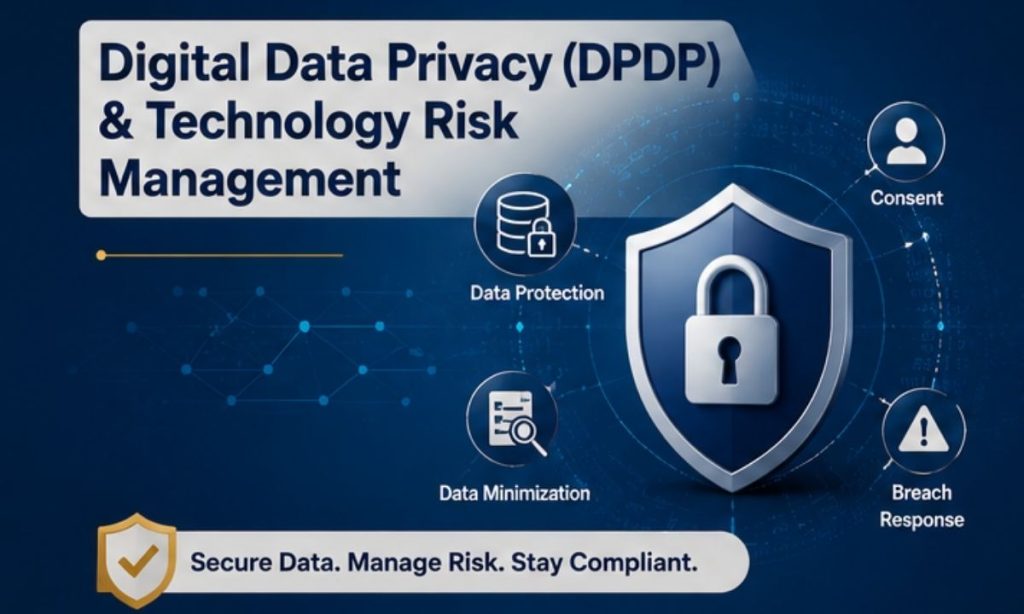
With the enactment of the Digital Personal Data Protection (DPDP) Act, technology companies, digital health platforms, fintech applications, and B2B SaaS ventures operating out of Karnataka face heightened statutory accountability regarding user data processing. Treating customer privacy as an afterthought or relying on generic, copy-pasted privacy policies from Western websites creates severe regulatory vulnerability. Engaging qualified Corporate Lawyers in Bangalore allows tech enterprises to conduct data mapping audits, establish compliant consent workflows, and insulate their platforms against substantial statutory penalties.
Adapting digital operations to the DPDP framework requires addressing three primary compliance and operational exposures:
- Notice and Consent Architecture: Businesses acting as Data Fiduciaries must provide clear, itemized notices in plain language before processing personal data, detailing the exact categories of data collected, the specific purpose of processing, and mechanisms for consent withdrawal. Bundled consent models, pre-ticked opt-in checkboxes, and deceptive dark patterns violate statutory norms, making user consent invalid and subject to regulatory scrutiny.
- Vendor Data Processing Agreements (DPAs): Tech companies frequently transmit customer data to third-party cloud hosting providers, customer relationship management (CRM) tools, and payment gateways without executing formal DPAs. Under statutory standards, Data Fiduciaries remain directly liable for security breaches occurring on their vendors’ infrastructure, making bilateral data protection addendums and audit rights mandatory.
- Statutory Penalties and Breach Notification Mandates: The Data Protection Board of India possesses statutory authority to levy penalties reaching up to ₹250 crore for significant data breaches or failure to implement reasonable security safeguards. In the event of a personal data breach, companies must follow strict, accelerated notification timelines to both the Board and affected Data Principals to mitigate regulatory exposure.
Establishing a verifiable data privacy management system protects enterprise valuation during institutional due diligence while building sustainable consumer trust across digital platforms.
Institutional Fundraising, Term Sheets & Governance Friction
Securing institutional equity financing from angel networks, venture capital funds, or family offices is a major milestone for growing enterprises. However, early-stage founders often prioritize headline valuations while overlooking restrictive governance covenants buried within Term Sheets and Shareholders’ Agreements (SHAs). Consulting a dedicated small business lawyer Bangalore ensures that founders negotiate fair investor terms, preserve board autonomy, and avoid structural cap-table dilution traps that restrict future funding rounds.
Early-stage ventures navigating equity or venture-debt transactions must evaluate three critical contractual provisions before signing binding definitive documents:
- Onerous Liquidation Preference Structures: Participating liquidation preferences (such as a 2x or 3x participating preference) allow investors to recoup their initial capital multiple times before sharing pro-rata in the remaining proceeds during an exit or acquisition. Negotiating standard 1x non-participating liquidation preferences ensures that founders and early employees participate equitably in upside distributions.
- Excessive Affirmative Voting Rights (Veto Powers): Investors routinely request affirmative consent over operational matters, including key executive hiring, operating budget approvals, client contract pricing, and debt financing. If these veto rights are drafted too broadly, ordinary business decisions can be stalled by minority shareholders, paralyzing day-to-day company agility.
- Broad Anti-Dilution and Restrictive Founder Covenants: Full-ratchet anti-dilution mechanisms penalize founders excessively during down-rounds by repricing investor shares to the lowest new valuation. Replacing these with broad-based weighted average formulas while removing unreasonable post-termination personal non-compete clauses protects founder equity across future financing cycles.
Carefully balancing investor protections against founder control during early funding rounds creates a clean governance structure that supports long-term corporate scaling.
Why Choose Escalade Legal Services?
Navigating regulatory scrutiny, equity negotiations, and multi-jurisdictional intellectual property protection requires legal partners who understand the fast-paced realities of modern commercial scaling. Generic contract templates and reactive dispute resolution are no longer sufficient to protect high-growth enterprises in competitive markets.
Escalade Legal Services combines deep technical specialization with commercial pragmatism to help founders and corporate leaders build resilient legal foundations from day one.
Growing enterprises choose Escalade Legal Services for four core institutional advantages:
- Tier-1 Pedigree with Boutique Agility: Headed by Venkata Raghavan R. (LL.M. in IP from UCLA, with alumni experience at premier institutions including Lakshmikumaran & Sridharan, ALMT Legal, and Warner Bros.), delivering institutional-grade legal strategy without the prohibitive retainer structures of legacy Big Law firms.
- End-to-End Technology & Corporate Synergy: Seamlessly bridging specialized Intellectual Property protection (managing 1,000+ registered trademarks, 500+ contentious oppositions, and patent prosecution) with core corporate advisory, M&A due diligence, and commercial contracting.
- Officially Recognized Startup Facilitators: Operating as empanelled Start-Up Facilitators under the Government of India’s Digital India initiative, tailoring lean, high-impact legal roadmaps specifically designed for emerging and venture-backed companies.
- Preventive, Diligence-Ready Architecture: Structuring airtight cap-tables, commercial MSAs, and employment frameworks that streamline institutional investor audits and eliminate valuation discounts during fundraising.
Embedding proactive legal hygiene directly into routine operations, businesses eliminate structural liabilities before they can compromise customer expansion or institutional financing rounds.
Conclusion
Proactive legal structuring is not an administrative cost center; it is a vital commercial asset that safeguards enterprise valuation and accelerates sustainable corporate growth. Whether you are formalizing co-founder equity, auditing enterprise SaaS agreements, navigating state labor compliance, or preparing for an institutional investment round, securing specialized counsel ensures your business scales securely and without regulatory compromise.
Schedule a Strategic Legal Consultation
To audit your corporate compliance, safeguard your proprietary intellectual property, or structure investor-ready commercial agreements, connect with the corporate and IP attorneys at Escalade Legal Services:
- Headquarters: Escalade Legal Services, Chambers 401, DBS House Business Centre, No. 26, Cunningham Road, Bengaluru, Karnataka 560052
- New Delhi Office: World Trade Towers, Barakhamba Lane, Connaught Place, New Delhi 110001
- Official Website: escaladelegal.com
- Direct Contact: +91 96110 57021 / escalade@escaladelegal.com
Taking the right legal steps today ensures your business is built to scale smoothly, securely, and with total regulatory clarity.