
In the highly visual modern consumer market, the unique aesthetic of a physical product is often its most lucrative commercial asset.
While ambitious founders naturally pursue Trademark registration in Bangalore to secure their brand name, safeguarding a physical shape requires an entirely distinct legal strategy. As a premier Design Intellectual Property Law Firm in Bangalore, we understand that navigating Design Protection India is a critical financial imperative for scaling enterprises.
Partnering with a specialized IP Attorney in Bangalore ensures your unique product aesthetics remain completely secure. When corporate boards choose a Top IP Law Firm in Bangalore, they successfully defend their market share against aggressive counterfeiters.
The most critical factor in this security process is recognizing that consumer purchasing decisions are heavily driven by visual appeal.
To help your management team and lead designers execute a flawless legal strategy, this comprehensive guide will navigate the exact statutory protocols required to secure your physical product aesthetics.
- We will decode the strict legal boundaries separating functional utility patents from purely aesthetic design registrations.
- We will explore the highly specific industry vulnerabilities across the furniture, fashion, electronics, and product packaging sectors.
- We will detail the rigorous pre-filing search protocols and the precise statutory execution pathways necessary to achieve absolute market dominance.
Mastering these precise statutory guidelines empowers your management team to proactively eliminate the threat of design theft before approving any new manufacturing budget. Understanding exactly how to execute these official government filings guarantees your business maintains a permanent visual monopoly.
Ultimately, this highly proactive legal approach allows your enterprise to dominate its specific commercial sector with absolute certainty and zero interference.
Legal Disclaimer
Please note that the strategic information provided throughout this comprehensive guide is intended strictly for general educational purposes and does not constitute formal legal advice. Before making any critical financial decisions regarding your manufacturing processes or product aesthetics, your board of directors must understand the specific limitations of this public article.
- Reading this material or navigating our digital platform does not create an official attorney-client relationship with Escalade Legal Services.
- Statutory frameworks and international registry guidelines evolve constantly, meaning some procedural details regarding design law may not reflect the absolute latest government updates.
- The insights shared in this publication cannot replace the rigorous, personalized legal counsel required to secure a highly complex global industrial design portfolio.
As every commercial enterprise faces unique market vulnerabilities and strategic supply chain challenges, we strongly urge all corporate founders to seek dedicated legal guidance tailored specifically to their manufacturing model.
You are highly encouraged to schedule a formal consultation with our expert legal team at the Cunningham Road office to ensure your design protection strategy is flawlessly executed.
Key Points at a Glance
To ensure absolute clarity for corporate directors and lead designers reviewing this comprehensive design guide, we have distilled the most critical strategic elements into a focused overview.
- The unique aesthetic of a physical product is a highly tangible financial asset that directly influences consumer purchasing decisions and overall market valuation.
- Formal design protection secures purely visual elements like shape and surface pattern, which is legally distinct from a utility patent that strictly protects internal mechanical function.
- Conducting a rigorous design IP search before finalizing manufacturing budgets is absolutely critical to avoid catastrophic infringement lawsuits from established industry rivals.
- Physical products must remain completely out of the public domain before the official government filing date to successfully meet the strict statutory requirement of absolute novelty.
- Securing an official design registration empowers your management team to aggressively enforce market exclusivity through customs recordal programs and strategic civil litigation.
This proactive legal approach prevents disastrous supply chain cloning and heavily secures your permanent aesthetic dominance in the global economy.
Beyond Form and Function
For a corporate board evaluating a new product line, understanding the precise legal mechanisms available to secure its physical assets is absolutely paramount.
A common point of confusion among executive teams is determining exactly what protects the intellectual property created by designers when a product is finally ready for commercial manufacturing. In the realm of physical goods, the law draws a very strict boundary between mechanical utility and visual aesthetics.
While utility patents secure the internal engineering and functional mechanics of an invention, design law exists strictly to protect the external, ornamental appearance of a physical product.
To ensure absolute clarity for your management team, the following breakdown illustrates the strict statutory jurisdictions governing physical commercial products.
| Intellectual Property Category | Primary Legal Objective | Practical Commercial Application |
|---|---|---|
| Utility Patent | Protects exactly how a specific product functions, operates, or is manufactured. | Securing exclusive commercial rights over a newly engineered internal mechanical gear or electronic microchip. |
| Trademark | Protects the brand identity, recognizable logos, and specific words associated with the product. | Securing the official corporate name printed on the exterior packaging to actively prevent consumer brand confusion. |
| Design Registration | Protects the pure visual aesthetic, including shape, physical configuration, and surface pattern. | Securing the unique, completely non-functional physical curvature of a luxury perfume bottle or high-end smartphone. |
To successfully secure this highly specific visual protection, the physical aesthetic must meet strict statutory criteria under the Designs Act.
The visual features applied to the article must appeal strictly to the eye and cannot be dictated solely by the technical function of the product itself. If an industrial shape is created purely to make a machine work efficiently without any regard for visual appeal, it falls completely outside the jurisdiction of design law.
Furthermore, the aesthetic configuration must be entirely novel and original, meaning it absolutely cannot have been published or disclosed to the public anywhere in the world before your official government filing date.
By clearly separating these distinct legal jurisdictions, your management team can implement a highly sophisticated, multi-layered intellectual property strategy. Securing the underlying mechanics with a standard patent while simultaneously locking down the external visual shape with a formal design registration creates an impenetrable legal fortress around your new product.
This comprehensive approach guarantees that aggressive competitors cannot bypass your engineering patents by simply manufacturing a cheap copycat that mimics your highly lucrative visual aesthetics.
Why Aesthetics Drive Revenue

When evaluating commercial risk, corporate directors must recognize that aesthetic theft impacts different manufacturing sectors in unique ways.
Across highly visual industries, the external shape of a product is exactly what justifies a premium retail price. Failing to secure formal design protection leaves your enterprise completely exposed to rapid cloning operations, which can saturate the market with inferior quality copies and permanently destroy your brand equity.
To understand the massive financial stakes involved, management teams must carefully analyze the specific intellectual property vulnerabilities inherent to their respective manufacturing sectors.
| Commercial Sector | Core Aesthetic Vulnerability | The Financial Impact of Design Theft |
|---|---|---|
| Furniture & Interior Decor | Ergonomic curves, unique joint structures, and bespoke sculptural silhouettes. | Cheap overseas manufacturers are flooding the market with low-quality replicas that completely undercut your premium pricing strategy. |
| High End Fashion & Apparel | Distinctive textile patterns, iconic handbag shapes, and unique footwear silhouettes. | Fast fashion conglomerates rapidly copy runway aesthetics, instantly diluting the exclusivity of your luxury brand. |
| Consumer Electronics | Sleek device bezels, proprietary camera array layouts, and ergonomic wearable curves. | Rival tech companies are cloning the premium external feel of your devices to steal your loyal consumer base without matching your internal engineering. |
| Luxury Product Packaging | Bespoke perfume bottle geometries, custom beverage containers, and tactile unboxing structures. | Counterfeiters are mimicking your exact shelf presence, causing direct consumer confusion and devastating your retail sales volume. |
Recognizing these specific industry threats empowers executive boards to take immediate defensive action before a new product ever reaches the public market.
Implementing a highly proactive legal strategy completely neutralizes these global supply chain vulnerabilities.
Ultimately, securing a strict statutory monopoly over your physical aesthetics guarantees that your enterprise captures the absolute maximum revenue from every single creative concept your design team develops.
The Pre-Filing Imperative and Mitigating Manufacturing Risks
Before a corporate board authorizes a massive manufacturing budget or signs extensive supply chain contracts, it must establish an absolutely flawless legal foundation.
Proceeding to the physical production phase without first confirming the legal availability of a new product shape exposes the entire enterprise to catastrophic financial liabilities. To effectively mitigate this severe commercial risk, executing a comprehensive design IP search is the absolute most critical preliminary step in the entire intellectual property lifecycle.
This rigorous investigative protocol acts as a primary corporate shield, preventing immediate government registry rejections and protecting your capital investments from devastating infringement lawsuits initiated by established industry rivals.
A professional aesthetic clearance investigation goes far beyond a simple visual comparison or a basic internet query.
Highly experienced intellectual property attorneys utilize-specialized proprietary databases and international classification frameworks to analyze several distinct vulnerability vectors before giving the green light for manufacturing.
- Locarno Classification Analysis: Scrutinizing the specific international design classes to ensure identical or confusingly similar visual configurations are not already registered within your exact commercial sector.
- Global Database Verification: Reviewing international frameworks like the Hague System to confirm foreign competitors have not already secured prior rights that could suddenly block your future export strategies.
- Public Domain Audits: Investigating industry trade journals, historic utility patents, and general market publications to guarantee your proposed design has not already lost its statutory originality through prior public disclosure.
Executing this meticulous level of due diligence guarantees that your final product design possesses the maximum possible chance of successfully passing the strict government examination phase.
Uncovering potential aesthetic conflicts during the early research and development stage allows your lead designers to make necessary structural modifications long before physical molds are cast and factory production begins.
Ultimately, this highly proactive legal strategy saves your enterprise massive amounts of wasted capital and provides your board of directors with the absolute confidence required to safely launch aggressive product marketing campaigns.
The Statutory Pathway of Securing Your Physical Assets
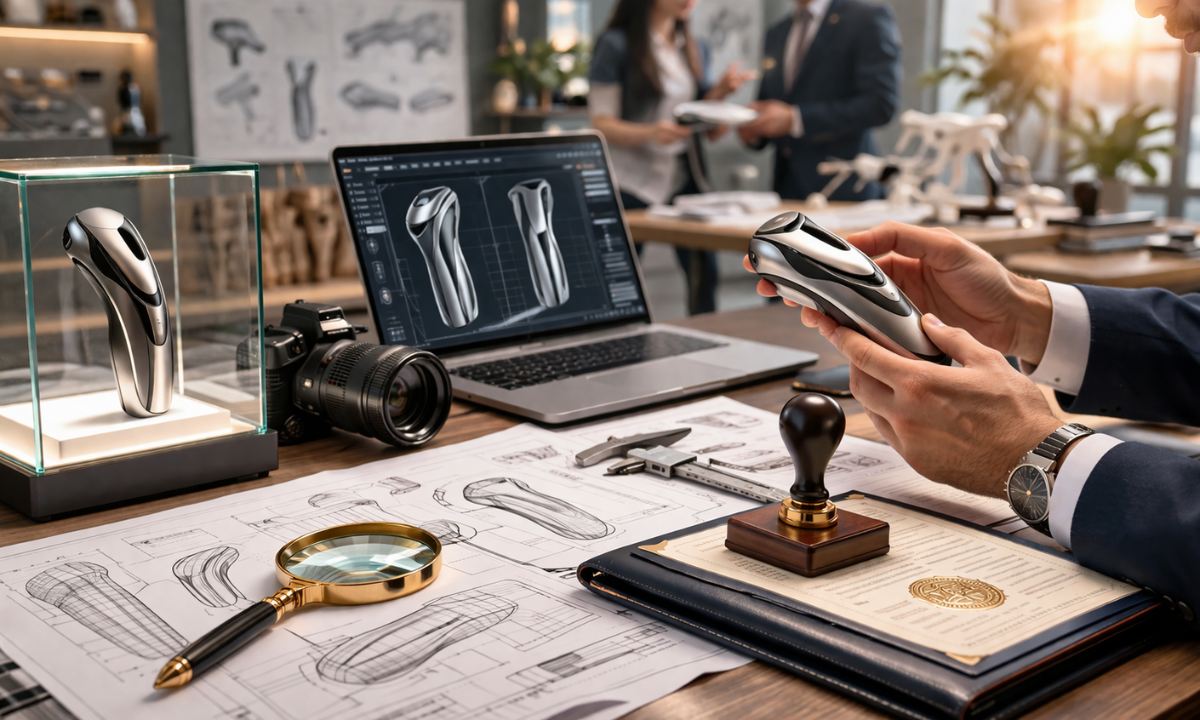
Once the preliminary aesthetic clearance search is completed, the corporate board must immediately execute the formal statutory filing process.
Achieving ironclad design protection in India requires strict adherence to the procedural guidelines mandated by the Designs Act. The most critical legal hurdle your management team must overcome is the strict requirement of absolute novelty.
If your lead designers reveal the new product on social media, display it at an industry trade show, or publish it in a commercial catalog before the official government filing date, the design instantly loses its statutory originality.
This catastrophic administrative error permanently disqualifies the product from receiving formal industrial design IP protection, leaving it entirely vulnerable to legal cloning.
To safely navigate this strict government portal, your appointed legal counsel will meticulously prepare and submit a highly specialized dossier of technical documents.
- High Resolution Representations: Submitting flawless, multi-angle visual renderings or precise technical photographs that capture the exact aesthetic geometry of the product from every conceivable perspective.
- Statement of Novelty: Drafting a highly specific legal declaration that pinpoints exactly which visual elements constitute the original aesthetic claim, clearly separating the protected design from standard industry norms.
- Class Specific Filing: Categorizing the physical product under the exact Locarno Classification code to ensure the government examiners evaluate the aesthetic claim against the correct commercial sector.
- Priority Claim Documentation: For global enterprises, legally linking the Indian application to previous international filings to secure a retroactive date of protection under recognized global treaties.
Executing this strict statutory protocol transforms a vulnerable physical prototype into a formally recognized, legally enforceable corporate asset.
Securing this official government certificate provides your executive board with the ultimate commercial leverage required to aggressively police the market.
This highly structured legal approach guarantees that your manufacturing investments remain completely secure from the very first day of public launch, allowing your enterprise to scale revenue without the constant threat of aesthetic piracy.
The Shield Against Counterfeits
Securing an official design registration is not the final destination for a corporate board; it is merely the acquisition of a highly powerful legal weapon.
To truly protect your commercial revenue, your management team must actively enforce these statutory rights against opportunistic competitors. An intellectual property certificate holds absolute zero financial value if your enterprise allows counterfeiters to operate in the open market without severe legal consequences.
Therefore, implementing an aggressive enforcement protocol is absolutely mandatory to maintain your hard-earned market exclusivity.
To effectively wield this statutory power, elite intellectual property attorneys help corporate boards execute three primary lines of commercial defense.
- Customs Recordal Programs: Registering your official design certificate with national customs authorities empowers border patrol officers to automatically seize and destroy massive shipments of cheap overseas counterfeits before they ever enter the domestic retail market.
- Strategic Cease and Desist Campaigns: Deploying highly aggressive, formally drafted legal notices to infringing manufacturers often forces immediate commercial compliance and total product withdrawal without the massive expense of a protracted courtroom trial.
- Civil Litigation and Injunctions: Leveraging your statutory rights in federal court allows your legal counsel to secure immediate temporary injunctions, completely halting the competitor’s manufacturing operations while simultaneously suing for massive financial damages.
Executing these strict enforcement measures transforms a passive government registration into an active, revenue-protecting corporate shield. Consistently policing your specific industry sends a highly visible warning to potential counterfeiters that your enterprise will aggressively defend its physical assets.
This unwavering commitment to strict legal enforcement guarantees that your unique product aesthetics remain completely exclusive to your loyal customer base.
Why Choose Escalade Legal Services
Entrusting the visual identity of your physical products to a legal partner requires absolute confidence in their statutory expertise.
Escalade Legal Services provides unparalleled intellectual property support to scaling manufacturing enterprises under the expert leadership of Attorney Venkata Raghavan, who brings over eighteen years of specialized legal practice to every single corporate client.
To understand why diverse visual industries consistently trust our specific legal methods for both domestic design registries and complex international Hague System filings, consider the distinct professional advantages of partnering with our premier institution.
- We conduct exhaustive Locarno Classification audits to proactively identify and neutralize aesthetic conflicts long before your enterprise commits capital to physical manufacturing.
- Our firm maintains deep expertise in executing flawless international design applications, ensuring your physical product aesthetics receive truly global protection as your supply chain expands across borders.
- We focus heavily on aggressive enforcement protocols, utilizing customs recordal programs and strategic litigation to permanently eliminate counterfeit operations from your specific market sector.
Selecting a legal partner with such deep institutional roots naturally provides your business with a massive competitive edge.
This specific combination of international reach and local statutory expertise ensures your product lines remain completely secure. Ultimately, our rigorous oversight allows your executive team to focus entirely on continuous aesthetic innovation and aggressive market expansion.
Conclusion
Building a highly successful manufacturing enterprise requires much more than just brilliant product engineering, because strict legal oversight is the only proven way to keep your unique aesthetics completely safe from market theft.
Implementing a proactive design protection strategy shields your board of directors from severe financial losses, secures your permanent visual monopoly, and makes your physical assets highly attractive to serious global investors.
You must take immediate action to formalize your internal intellectual property policies, ensuring your lead designers operate safely within the strict boundaries of design law at all times.
We strongly invite all corporate boards and manufacturing founders to book a comprehensive product design audit at our Escalade Legal Services, located on Cunningham Road in Bangalore. Together, we will build an impenetrable legal framework around your daily manufacturing operations, securing your financial legacy and protecting your unique commercial shapes for decades to come.
Frequently Asked Questions
1. What is the exact legal difference between a design registration and a standard utility patent?
While a standard utility patent strictly protects the internal mechanics, technical engineering, and functional operation of a new invention, a design registration exclusively secures the external visual aesthetic. If a specific physical feature is dictated entirely by how the product works rather than how it looks, it falls outside the jurisdiction of the Designs Act and cannot receive aesthetic protection.
2. How long does an official industrial design registration remain legally valid in India?
Under the strict Indian statutory framework, an officially registered design is initially protected for a formal period of ten years from the date of filing. This exclusive legal monopoly can be officially renewed for one additional term of five years, providing your enterprise with a maximum total protection period of fifteen years before the visual aesthetic permanently enters the public domain.
3. Can I secure design protection if my physical product has already been showcased on social media or at a public trade exhibition?
No, you cannot. Indian design law mandates strict absolute novelty, meaning the physical aesthetic must be entirely unpublished anywhere in the world before your official government filing date. Releasing promotional images of your new product on digital platforms, commercial catalogs, or open trade shows immediately destroys its statutory originality, permanently disqualifying the design from receiving formal legal protection.