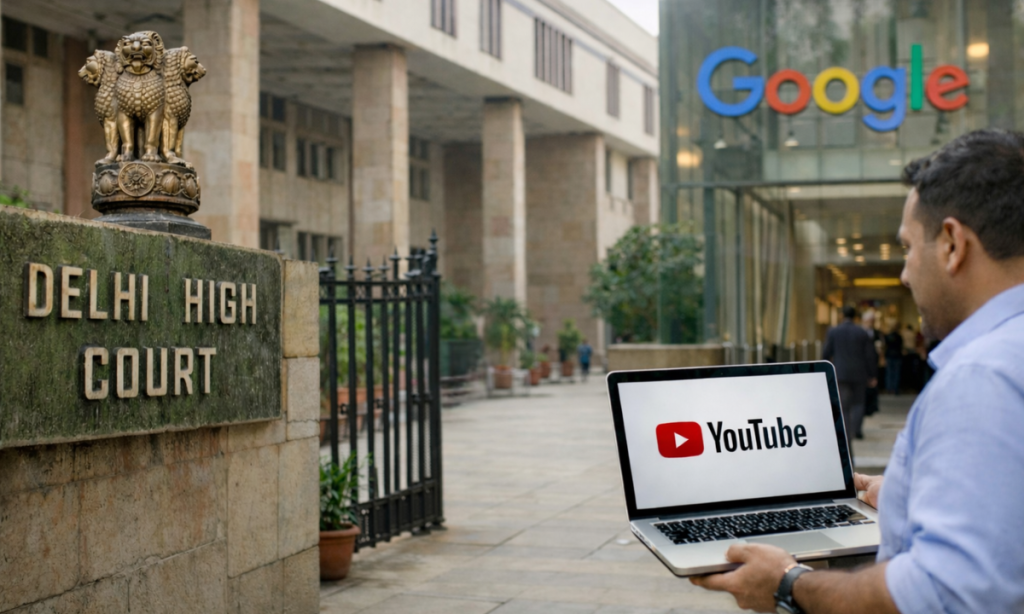
The recent decision of the Delhi High Court in Associated Broadcasting Company v. Google marks an important development in Indian copyright law, particularly in the context of digital platforms and “copyright strikes.”
The dispute arose when Associated Broadcasting (TV9) received multiple copyright strikes on YouTube for using short clips of natural disasters in its news broadcasts. These clips, sourced from foreign agencies, were used with added commentary and reporting. The strikes posed a serious risk, as repeated complaints could lead to channel termination and loss of revenue.
The Court ruled in favour of TV9 on two key grounds. First, it held that raw footage of natural events such as floods or storms may not meet the threshold of originality required for copyright protection, as such recordings lack sufficient creative input. Second, even if copyright subsisted, the use of short clips within news reporting would qualify as “fair dealing” under the Copyright Act.
More significantly, the judgment provides clarity on Section 60 of the Copyright Act, 1957, which deals with groundless threats of infringement. The Court recognised that issuing copyright strikes without initiating genuine legal proceedings could amount to actionable threats. It also rejected attempts by rights holders to retrospectively justify such strikes by filing belated or tactical lawsuits.
This ruling is particularly relevant in the digital era, where platform-based enforcement mechanisms can be misused to pressure content creators. By allowing creators to challenge abusive strikes, the Court has introduced a meaningful—though limited—safeguard against overreach by copyright claimants.
In conclusion, the decision strikes a careful balance between protecting copyright owners and preventing misuse of enforcement tools. It strengthens the position of content creators while reaffirming core principles of originality, fair dealing, and procedural fairness in copyright law.